
- InputArena – Compare Mouse & Keyboard
- All Gadgets
- Compare
- Lofree Flow Lite84 vs Lofree Flow Lite100
Lofree Flow Lite84 vs Lofree Flow Lite100
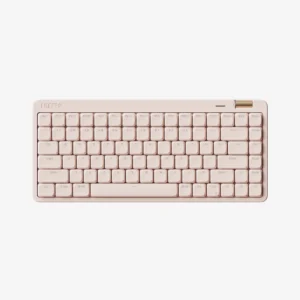
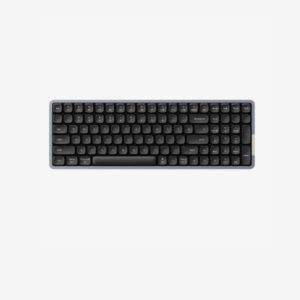
Lofree Flow Lite84 vs Lofree Flow Lite100
Lofree Flow Lite84 vs Lofree Flow Lite100 is a comparison about typing feel, layout practicality, customization and desk fit. The right choice depends on whether you want a compact low-profile board, a more premium build, stronger software support, longer battery life or a specific switch feel. Use the guide below to compare the actual ownership experience, not only the raw specs. The imported comparison notes highlight: Lofree Flow Lite84 vs Lite100 Comparison: Compact 75% (84 keys, 550g, 2000mAh) meets full-featured 96% (100 keys, 658g, 3000mAh). Both offer gasket mount, low-profile POM switches, tri-mode connectivity, hot-swap.
⚖️ Key Differences
- Lofree Flow Lite84 should be judged by its typing feel, layout comfort, battery claim and how well it fits your existing desk setup.
- Lofree Flow Lite100 should be judged by its switch system, build quality, software support and whether its extra features improve daily use.
- Low-profile boards usually win for portability and wrist comfort, while taller or hybrid boards can feel more customizable and deeper-sounding.
- For productivity, layout and key placement matter more than RGB; for gaming, polling rate, latency mode and stable wireless matter more.
- Before buying, confirm the exact switch option, hot-swap compatibility, keycap profile, OS layout and warranty for your region.
| Lofree Flow Lite84 – Full specification | Lofree Flow Lite100 – Full specification | |
|---|---|---|
| Overview | ||
| Price | $99.00 | — |
| Our Rating | ||
| Brand | lofree | lofree |
| Category | Keyboard | Keyboard |
| Genral Info | ||
| Brand | Lofree | Lofree |
| Model Name | Flow Lite84 | Flow Lite100 |
| Series | Flow Series | Flow Series |
| Type | Mechanical (Wireless + Wired) | Mechanical (Wireless + Wired) |
| Layout | Compact 75% (84 keys) | 75% (Compact) |
| Release Year | 2024 | 2024 |
| Use Case | Work, Typing, Productivity, Minimalist Setup | Work, Gaming, Productivity, Aesthetic Setup |
| DESIGN & BUILD | ||
| Frame Material | Aluminum top cover + ABS bottom shell | Aluminum-magnesium alloy top, ABS plastic base |
| Plate Material | Polycarbonate (flexible typing feel) | Steel with sound dampening layer |
| Keycap Material | PBT (Dye-sublimated) | PBT (Dye-sublimated) |
| Color Options | Milk White, Cloud Blue, Space Grey | White Mist, Forest Green, Smoky Black |
| Dimensions (L × W × H) | 320 × 136 × 28 mm | 325 × 138 × 32 mm |
| Weight | 820 g | 850 g |
| Form Factor | Compact 75% low-profile | Compact 75% layout |
| Finish | Matte anodized surface with smooth texture | Anodized matte coating with chamfered edges |
| SWITCH & TYPING EXPERIENCE | ||
| Switch Type | Low-profile mechanical (Hot-swappable) | Mechanical (Hot-swappable) |
| Switch Options | Lofree Ghost Linear / Phantom Tactile | Kailh Box White V2 / Gateron Baby Kangaroo / Lofree Ghost Linear |
| Mount Type | Gasket mount structure | Gasket mount with dual silicone isolation pads |
| Stabilizers | Factory lubed plate-mounted stabilizers | Factory pre-lubed screw-in stabilizers |
| Typing Angle | Adjustable (2-stage tilt stands) | Adjustable (2 levels) |
| Key Rollover | Full N-key (wired) / 6-key (wireless) | Full N-key (wired) / 6-key (Bluetooth) |
| Actuation Force | Approx. 50g (depends on switch) | 40–50g (depending on switch) |
| Key Travel | 1.8 mm actuation / 3.2 mm total | 2.0 mm actuation / 4.0 mm total |
| Typing Feel | Balanced, snappy response with soft cushioning | Balanced tactile feedback with low-pitched “thock” acoustics |
| PERFORMANCE | ||
| Response Time (Bluetooth) | 8–10 ms (Bluetooth) | 8–10 ms (Bluetooth) |
| Response Time (Bluetooth) | 8–10 ms (Bluetooth) | 8–10 ms (Bluetooth) |
| Anti-Ghosting | 100% (NKRO) | 100% (NKRO) |
| Input Lag | Negligible in gaming mode | Negligible (Optimized gaming mode) |
| Latency Mode | Low-latency toggle supported | Low-latency toggle via Fn shortcut |
| RGB & LIGHTING | ||
| Backlight Type | Per-key RGB | Per-key RGB with ambient glow ring |
| LED Orientation | South-facing LEDs | South-facing LEDs |
| Lighting Effects | 20+ preset effects | 20+ preset effects with gradient modes |
| Custom Effects | Fully programmable via Lofree Console software | Programmable via Lofree Console software |
| Brightness Levels | 5-step adjustable | 6-step adjustment |
| Control | Onboard shortcuts or companion software | Onboard shortcuts + software customization |
| SOFTWARE & CUSTOMIZATION | ||
| Firmware | Proprietary + VIA compatible | QMK / VIA compatible |
| Key Remapping | Fully programmable | Fully programmable |
| Macro Support | Layer-based macro recording | Up to 4 layers of macros |
| Profile Storage | Supports up to 3 onboard profiles | 3 onboard profiles |
| Firmware Update | Firmware update via USB-C | Firmware update via USB-C |
| Hotkey Shortcuts | Brightness, media, lighting, and device switching | Lighting, media controls, brightness options |
| SOUND & COMFORT | ||
| Acoustic Dampening | Integrated silicone pad + foam lining | Integrated Poron and silicone layers |
| Typing Sound Profile | Muted, consistent “thock” sound | Muted “thock” with minimal echo |
| Gasket Mount | Gasket mount with soft internal padding | Gasket mount soft and flexible feedback |
| Noise Reduction | Optimized for quiet typing | Noise reduction through multiple dampening layers |
| Wrist Rest | Optional magnetic wrist rest | Optional magnetic palm rest |
| Tilt Feet | Dual-step adjustable | Dual-level height adjustment |
| Support and compatibility | ||
| Software Support | Windows, macOS, Linux, Android, iOS | Windows, macOS, Linux, Android, iOS |
| Plug-and-Play | VIA / Lofree Console | Lofree Console / VIA |
| Layout Options | Includes both Windows and Mac keycaps | macOS / Windows caps included |
| BATTERY & CONNECTIVITY | ||
| Battery Capacity | 4000 mAh | 4500 mAh |
| Battery Type | rechargeable lithium battery | rechargeable lithium-polymer |
| Battery Life (No RGB) | Up to 240 hours | Up to 220 hours |
| Battery Life (RGB On) | 80–100 hours | 70–90 hours |
| Charging Port | USB Type-C | USB Type-C |
| Charge Time | About 3 hours | Approx. 3 hours |
| Wireless Mode | Bluetooth 5.1 | Bluetooth 5.2 |
| Wired Mode | USB-C connection | USB-C cable connection |
| Multi-Device Pairing | Yes, up to 3 devices | Yes, up to 3 devices |
| Switch Between Devices | Fn + 1/2/3 shortcuts | Fn + 1/2/3 shortcuts |
| Polling Rate (Wired) | 1000 Hz | 1000 Hz |
| Polling Rate (Wireless) | 125 Hz | 125 Hz |
🧾 Side-by-Side Buying Summary
Choose Lofree Flow Lite84 if its layout, switch feel and price make more sense for your daily typing. It is the safer pick when you want the comparison to stay practical: comfortable keys, reliable wireless and a familiar layout.
Choose Lofree Flow Lite100 if its build, software, switch technology or battery package gives you a clear advantage. It is the better pick when you will actually use the customization or premium typing features.
Both keyboards should be compared by ownership details: key spacing, stabilizer feel, sound profile, battery with lighting, firmware support and replacement keycap availability.
⚡ Performance Comparison
Lofree Flow Lite84 should feel strong for productivity if it gives consistent wireless, comfortable key travel and a layout that reduces mistakes. For gaming, check its polling rate and latency mode rather than assuming all wireless keyboards behave the same.
Lofree Flow Lite100 is the stronger performance choice if it offers better polling, lower latency, Hall Effect control, QMK/VIA support or more predictable switch tuning. Those advantages matter most when you customize keys or play fast games.
Look closely at 550g, 658g, 2000mAh, 3000mAh, tri-mode, hot-swap. A keyboard can be technically impressive but still less useful if the layout slows you down or the switch feel does not suit your typing style.
🧩 Design & Build Comparison
Lofree Flow Lite84 works best if you like its case height, angle and layout spacing. Portable boards can be easier on the wrist and better for mixed laptop/desktop setups.
Lofree Flow Lite100 works best if you prefer its build material, acoustic design, gasket/foam setup or layout extras. A heavier or more premium case can sound better but may be less portable.
Compare size, case material, keycap profile, stabilizers and weight. A compact layout saves desk space, while a larger layout may be better if you rely on function keys, navigation keys or a number cluster.
🔌 Connectivity / Compatibility Notes
Lofree Flow Lite84 is better if it connects quickly across your main devices and keeps stable battery life without constant software setup.
Lofree Flow Lite100 is better if it offers stronger multi-device support, 2.4GHz gaming mode, Bluetooth flexibility or deeper remapping support.
Check Windows/Mac layout support, Bluetooth device count, 2.4GHz receiver availability, USB-C wired mode, VIA/QMK support and whether remapping works without always running software.
👥 Who Should Choose Which?
- You prefer the typing angle, size and layout of Lofree Flow Lite84.
- You want a practical keyboard for daily writing, office work or travel.
- You do not need deep firmware customization or special gaming switch features.
- It is cheaper while still offering the switch feel and battery life you need.
- You want the specific upgrades offered by Lofree Flow Lite100, such as better software, build, switches or wireless mode.
- You plan to remap keys, tune the layout or use the keyboard for both gaming and productivity.
- You prefer its sound profile, case material or typing feel.
- The price gap is small enough that the extra features will be used regularly.
🛒 Practical Buying Advice
Do not choose only by brand or RGB. For Lofree Flow Lite84 and Lofree Flow Lite100, the best buy is the board whose layout you can use without mistakes every day. Check the exact switch option, hot-swap limits, keycap compatibility, battery life with backlight, software support and return policy. If you type for long hours, prioritize comfort and sound; if you game, prioritize stable 2.4GHz mode and latency.
🏆 Winner by Use Case
whichever board has your preferred switch feel and key height — test this before prioritizing specs.
Lofree Flow Lite100 — choose it if its firmware or switch system gives more control.
Lofree Flow Lite84 — choose it if it is slimmer, lighter or easier to pair with a laptop.
the cheaper board if both offer the layout, wireless mode and battery life you need.
❓ Frequently Asked Questions
Is Lofree Flow Lite100 a clear upgrade over Lofree Flow Lite84?
Only if its layout, switches, software or build improvements solve something you care about.
Which keyboard is better for typing?
Choose the one with the switch feel, key spacing and case angle you find comfortable. Specs alone cannot decide typing comfort.
Which one is better for gaming?
Prefer the model with stable 2.4GHz/wired mode, lower latency and the switch technology you need for fast inputs.
What should I verify before purchase?
Confirm layout, switch option, hot-swap support, OS compatibility, keycap profile, battery with lighting and warranty.
🏁 Final Verdict
Pick Lofree Flow Lite100 if its upgrades are features you will use every week, not just nice-to-have items in a spec table. Pick Lofree Flow Lite84 if it gives you the right layout, typing feel and battery life at a better price. In this comparison, the smarter choice is the keyboard that improves your real typing routine with the fewest compromises.
✅ Source / Verification Notes
- Manual guide data is stored in the APS comparison guide meta fields, not only in post content.
- Use the product pages and seller listing to verify final specs, price, included accessories and regional variants before publishing.
- This text avoids lab-test claims unless those claims are present in your own product data or verified source notes.